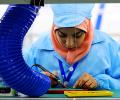
India has launched the ~62,500 crore Mobile Phone Manufacturing Scheme (MPMS) to incentivise domestic production and strengthen Indian mobile phone brands, offering production-linked incentives and additional benefits for local component sourcing.
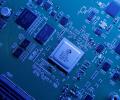
The Indian government has approved two major manufacturing initiatives worth nearly Rs 1.9 lakh crore (USD 22 billion) to expand the country's semiconductor ecosystem and scale up mobile phone production, aiming to strengthen its position as a global electronics manufacturing hub.

Apple Inc, which had planned to shift only 10 per cent of its global production base from China to India with respect to iPhones at the end of FY26, is currently churning out one out of every four iPhones in the world from India.

A day ahead of the interim Budget, India slashed import duty on spare parts, like battery cover, lens and SIM socket, used in mobile phone manufacturing to 10 per cent, from 15 per cent. The duty cut is aimed at boosting local production and exports, as well as reducing prices in local markets. The finance ministry on January 30, notified the cut in duty on all goods for use in manufacture of cellular mobile phones to 10 per cent.

The government on Monday extended the period of production-linked incentive scheme for large-scale electronics manufacturing with a focus on mobile phones by a year until 2025-26. The base year of the scheme 2019-20 remains the same but the companies will have the option to choose their five-year period either from the base year or the year 2020-21 for calculation of the incentives under the scheme. "Now we have extended the tenure of the scheme from 2020-21 to 2025-26. "Earlier, it would have ended in 2024-25.

India's exports of printed circuit boards (PCBs) to China dramatically increased over 40-fold to $1.5 billion in FY26, indicating a significant shift where China is increasingly importing simpler electronic assemblies from India as it focuses on higher-value manufacturing domestically.

Finance Minister Nirmala Sitharaman on Sunday proposed to increase the outlay on electronics manufacturing to Rs 40,000 crore in the 2026-27 fiscal year.

The government has approved Rs 357.17 crore for Apple's vendor Foxconn India and Rs 58.29 crore for Dixon Technologies subsidiary Padget Electronics under the Production-Linked Incentive scheme for mobile phones. This is the first time the government has cleared an incentive of a global company engaged in electronics manufacturing in the country. "Foxconn Hon Hai Technology India Mega Development Pvt. Ltd is the first global company that has been approved under the target segment 'Mobile Phones' (in the category of invoice value of Rs 15,000 and above) to receive incentive under mobile manufacturing for the period 1 August 2021-31 March 2022 based on its incremental investments and sales figures.

The Bureau of Indian Standards (BIS) is preparing to significantly increase its silver jewellery testing capabilities and expand its national laboratory network, driven by a shift in consumer demand from gold to silver and a broader push for enhanced product certification and surveillance.

In a communication to the empowered committee on PLI recently, the Indian Cellular & Electronics Association (ICEA) has stated that except one player (Samsung), all the other eight players (which include vendors of Apple Inc) selected under the scheme were facing numerous challenges in fulfilling the qualification criteria.

Apple CEO Tim Cook's strategic pivot, from initial rejections to local partnerships and leveraging government policies like PLI, transformed India into a major iPhone manufacturing and export hub, now accounting for one in every four iPhones assembled globally.

'1991 was an exceptional period in Indian history.' 'A big 400-volt shock was administered to the system, which was required. Today, we are in a much, much better position.'

The government on Tuesday notified the Rs 22,919 crore scheme to promote domestic manufacturing of electronics components, display and camera modules, non-surface mount devices, multi-layer printed circuit boards and lithium-ion cells for digital applications, among others. The scheme is likely to be operationalised in the next 2-3 weeks.

Union telecom minister Jyotiraditya Scindia on Tuesday said investment in India at present makes economic sense for every original equipment manufacturer, as he cited the example of US smart devices major Apple's decision to source majority of the iPhones sold in the US from the country. While speaking at the Bharat Telecom event, Scindia said the investment in India at present is not just an act of goodwill alone but it makes economic sense for every OEM (original equipment manufacturer).

The GST rate on mobile phones will be hiked to 18 per cent while that on maintenance repair overhaul (MRO) services for aircraft will be lowered to 5 per cent with effect from April 1, Finance Minister Nirmala Sitharaman said on Saturday. The GST rate on handmade and machine-made matchsticks has been rationalised to 12 per cent from 5 per cent and 18 per cent respectively.

Goods and services tax (GST) collections from mobile device companies, amounting to Rs 1.82 trillion between 2020-21 (FY21) and 2023-24 (FY24), have already generated more than five times the revenue for the government compared to the Rs 34,149 crore allocated under the production-linked incentive (PLI) scheme for mobile devices over six years ending 2025-26 (FY26). Currently, the GST on mobile devices stands at 18 per cent.

Finnish phone manufacturer Human Mobile Devices (HMD Global), which acquired the Nokia brand name from Microsoft, is planning to make India a key manufacturing hub for its phone exports. The company only began exporting late last year with the Nokia 105 Classic. What started mainly with feature phones will now extend to smartphones - it announced the global launch of models under the HMD brand for the first time a few days ago and these will be available in India too.
In a move to deepen manufacturing in electronics in India, the Centre is targeting 35-40 per cent value-addition through the yet-to-be launched production-linked incentive (PLI) scheme for electronics components, sources in the government

'We can hope to see a lot of creation of jobs in the days to come.'


Smartphones have been a key success story of the government's production-linked incentive scheme, helping India become the second-largest mobile phone manufacturing country, after China.

Two of Apple Inc's global vendors -- Wistron and Foxconn (through Han Hoi), which already manufacture Apple phones in India -- and a third entity, Pegatron, which will be setting up a new plant, have applied to the government to be eligible under the PLI scheme for large-scale electronics manufacturers.

The Ministry of Electronics and Information Technology (Meity) is looking at a proposal to generate 1.5-2 direct jobs for every Rs 1 crore invested by companies under the proposed electronic components production-linked incentive (PLI) scheme. If this plan fructifies, a Rs 10,000 crore investment under the proposed PLI scheme would bring with it the expectation of creating 15,000-20,000 direct jobs in electronic components sector.

The mobile phone manufacturers are planning to plead with the government that the new rules suggested by the DoT could leave them with no option but to stop introducing new phone models in the country if the stringent rules are eventually approved.
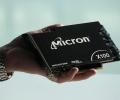
Micron Technology, a global leader in memory and storage, is considering supplying Made-in-India chips from its Gujarat plant to one of its key global clients, Apple, whose vendors assemble iPhones in the country. Micron is setting up an assembly test marking and packaging (ATMP) plant in Sanand, Gujarat. Currently, Apple vendors import chips for manufacturing iPhones. Sources in the know say the aim is to use part of the production to supply to Micron's clients in India directly.

Prime Minister Narendra Modi, speaking at the India Mobile Congress in New Delhi on Friday reeled out statistics to show how India has turned into an exporter of mobile phones from being an importer and how big tech companies -- from Apple to Google -- are lining up to become manufacturers in the country. He said after the fastest rollout of 5G mobile telephony services, India will lead the world on 6G. Recalling the launch of 5G technology in the country on October 1, 2022, he remarked that within a year there are about 5 lakh 5G base stations across the country.

'Those trying to use these funds for quick gains should avoid them due to risk of being late to the party.'

...but are we chasing yesterday's dreams, asks Ajit Balakrishnan.

Any industrial policy is only as good as how it is applied and the other reforms that support it. This was as true 40 years ago as it is now, points out Debashis Basu.

A Rs 23,000-crore production-linked incentive (PLI) scheme for electronic components may boost margins and enable a broader product mix.

The bilateral trade between India and China has been growing at a healthy rate, but the trade gap remains sharply tilted in Beijing's favour. India has time and again flagged its concern over the ballooning trade deficit and the non-trade barriers faced by Indian goods in the Chinese market.
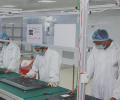
Dixon Technologies right now is a beehive of activity. It is building a new facility in Noida to make 1.3 million laptops for Taiwanese PC maker Acer. The facility must be up and running in four months. The pace of activity will only increase. Last week Dixon won a similar contract from Lenovo, the Chinese personal computer maker and the third largest information technology (IT) hardware brand in India, to assemble laptops and notebooks. Though the clientele in these two cases is Taiwanese and Chinese, Dixon is a company reaching for the stars with its feet planted firmly in the Indian government's policy.

The US tech major is planning to begin local production of its upcoming iPhone 12 by next April - within six months of its launch.

Apple's three vendors in the country have hit the milestone of creating 30,000 new direct jobs since the production-linked incentive (PLI) scheme for mobile devices kicked off in April 2021. Based on the government's estimate that one direct job in the electronics industry helps to generate three indirect ones, Apple's vendors, Foxconn Hon Hai, Wistron and Pegatron, are close to creating 100,000 direct and indirect jobs. The direct jobs that the vendors have created account for a fourth of Apple's commitment to generate 60 per cent of the new direct jobs out of the 200,000 jobs targeted by the government under the PLI scheme within five years.

He took a swipe at former Congress president Rahul Gandhi over his remark during a rally in MP on Monday that mobile phones in the people's pockets were "Made in China" and they should rather be "Made in Madhya Pradesh".

Driven by smartphone, electronics exports have reached $22.5 billion in value in the first eight months of the current financial year (FY25), a near 28 per cent growth over the $17.66 billion electronics exports during the corresponding period of FY24.

The government gave clearance to five global and five Indian players that have made a commitment to a production value of 12.5-trillion phones in five years under the Production Linked Incentive scheme.

PC maker Lenovo India will start manufacturing 50,000 GPU-based AI servers in India next year, the company said on Tuesday. Besides this, Lenovo announced setting up its fourth largest research and development centre in Bengaluru. Lenovo India managing director Shailendra Katyal said that the company will make servers locally and also export them from its manufacturing unit in Puducherry.

Despite the robust growth in this country, Apple's India share in its overall global sales remained modest -- constituting 1.5 per cent of its overall turnover of $389 billion in FY23.

Anticipating US action on tariffs, India seems to have made the first move by revamping its tariff structure by reducing the slabs to eight rates, points out Mukesh Butani.
